
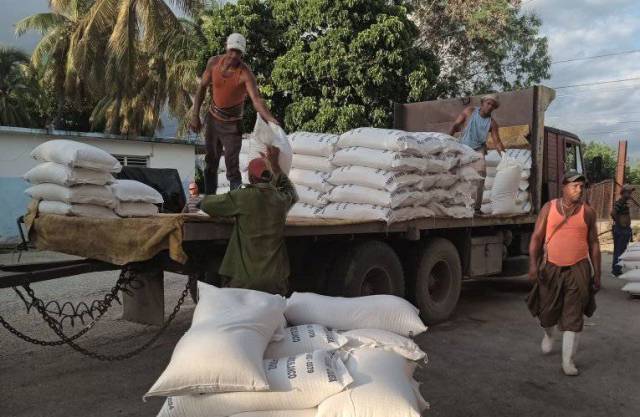
 Guantanmo.- The municipality of Imías is strengthening and expanding the availability of the regulated basic food basket through local production and partnerships with new economic actors in the non-state sector.
Ernesto Cabrera Ortiz, Director of the Municipal Trade and Gastronomy Company in Imías, explained to the newspaper Venceremos that the initiative arose due to limitations in the arrival of products to the country and the impact of the tightening of the United States’ economic blockade.
The goal is to ensure the availability of the basic food basket through local initiatives, which prioritizes distribution to vulnerable groups such as children, pregnant women, and adults under 65 years old.
He detailed that since last month, beans and fish have been sold through bodegas (small grocery stores) and community councils, with subsidized prices for certain sectors and vulnerable individuals. Pregnant women receive fish for 300 pesos, and other age groups for 400 pesos.
Distribution of the food basket began in Jesús Lores and the La Línea area, but its gradual expansion is planned. He added that the new economic actors are actively participating in the production and supply of manufactured foods, contributing sausages such as ham, as well as incorporating modules for pregnant women with mashed potatoes, vinegar, and flour obtained from root vegetables like sweet potato.
“The agreement,” Cabrera Ortiz revealed, “is that we guarantee economic actors fuel at affordable prices to avoid excessive cost increases, while the integration of SMEs into the state sector ensures supply stability and allows for greater control over marketing.”
Imías has 39 warehouses that serve more than 8,400 consumers distributed in mountainous and hard-to-reach areas, where it is expected to reach with these alternatives always taking advantage of the potential of local producers.
In this regard, the Director of the Municipal Trade and Gastronomy Company in Imías reported that they also plan to incorporate the sale of charcoal and food items per family unit, as part of strengthening the municipal self-management capacity to guarantee greater access to basic products for the people.
