
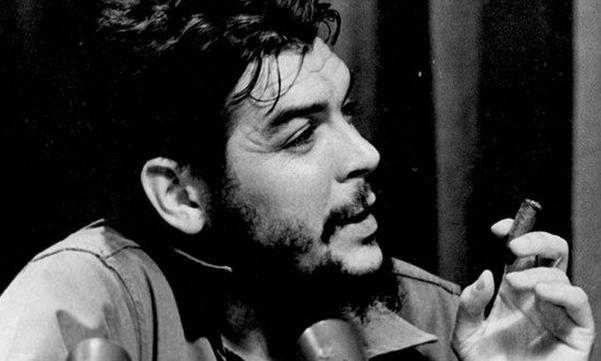
 Guantanamo.- The belief that Che Guevara could be silenced through his murder proved misguided, as he emerged as a powerful symbol for generations across the globe. On October 8 and 9, 1967, in La Higuera, Bolivia, his captors hesitated to execute him, despite his dire circumstances—wounded, disarmed, and in a state of disarray. His unwavering gaze conveyed to his captors that the Guerrilla spirit remained unbroken.
The order for his assassination, issued by the Central Intelligence Agency and the U.S. government, was followed by a secret burial intended to erase his legacy. However, Che’s ideals of justice, internationalism, and anti-imperialism have endured, particularly in Cuba, where his Marxist philosophy has inspired resistance against U.S. hostility for over sixty years. Today, his principles continue to resonate within the Cuban populace.
Fidel Castro aptly described Che as a mentor and a figure who shaped others in his image. Che’s commitment to his beliefs was evident in his actions, as he consistently held himself to the same standards he expected of others. From the moment he joined Fidel in the fight for liberation, Che became an integral part of the Cuban identity, demonstrating remarkable bravery in key battles that contributed to the nation’s quest for true sovereignty.
“Che Comandante,” by Nicolás Guillén (1902 – 1989), Cuba’s National Poet Laureate, was read on the solemn evening of October 18, 1967, in Havana’s Plaza de la Revolución, shortly after Che’s death was announced to the world.
Not because you have fallen
is your light less bright.
A stead of fire
sustains your guerilla presence sculpted
in the wind and clouds of the Sierra.
Not because you are hushed are you silent.
Not because they burned you,
because they concealed you beneath the earth,
because they hid you in cemeteries, woods, barren plains,
are they going to prevent us from finding you,
Che Comandante,
With its teeth of jubilation
North America laughs. A little early,
stir in your deathbed of dollars.
Your laughter will freeze in a mask,
and your great steeled body rises,
disseminated among guerillas like horseflies,
and your immense name wounded by soldiers
illuminates the American night
with a shooting star, fallen
amidst an orgy.
You knew it, Guevara,
but you said nothing, out of modesty,
to not talk about yourself,
Che Comandante,
You are everywhere. In the Indian
made of dreams and copper. In the Black
immersed in the maddened crowd,
in the being of oil workers and salt miners,
in the terrible abandon of the banana, in the great plains of leather,
and in the sugar and salt of coffee plantations,
you, immobile statue of your blood they shed,
alive, against their wishes,
Che Comandante,
Cuba knows you by heart. Face
with a beard that lightens. And marble
and olive in the skin of a young saint.
A firm voice that directs without ordering,
gentle and hard, of a comrade commander.
We see you every day minister,
every day soldier, every day
easygoing and difficult,
every day.
Pure as a child
or as a pure man
Che Comandante,
You pass in your faded, torn,
field uniform full of holes.
In the jungle, as it was before in the Sierra. Half bare
the powerful chest of guns and words,
of fiery gale and gentle rose.
There is no rest.
Health, Guevara!
Or better yet, from the depths of America:
Wait for us. We will depart with you. We want to die
to live like you have died,
to live like you live,
Che Comandante,
