
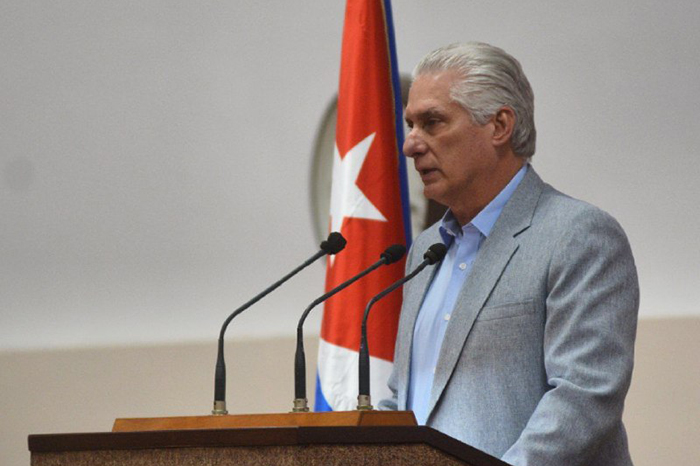
 Guantanamo.- The International Congress on Management, Local Development, Tourism and Cooperatives (CE-GESTA 2026) concluded at Havana’s Convention Center after three days of discussions. Participants reaffirmed that local development is a state policy and called for science and innovation to serve as pillars for advancing Cuba’s approved economic and social transformations (TES).
Organized by the Center for Studies on Management, Local Development, Tourism and Cooperatives at the University of Pinar del Río, the event brought together approximately 800 delegates and guests from Cuba and 17 other countries, both in person and online.
Carlos César Torres Paz, president of the Organizing Committee, noted that CE-GESTA 2026 was the largest event held in Cuba on territorial development, cooperatives and sustainable local tourism.
The sessions, from November 10 to 12, placed particular emphasis on implementing the TES approved by the Cuban government, strengthening municipal autonomy, decentralizing responsibilities and promoting coordination among all economic actors, both state and non-state.
During one of the specialized panels, Cuban Tourism Minister Juan Carlos García Granda stressed that most of the 176 TES have a direct impact on tourism— a sector expected to boost the economy and foster sustainable local development in communities across the country.
The congress was supported by international organizations and prominent figures, including Pablo Ruiz Hiebra, Resident Coordinator of the United Nations System in Cuba.
At the opening session, he reaffirmed the organization’s support for national efforts to promote territorial development while acknowledging the urgency of the transformations currently under way.
For the first time, the event also featured a workshop on women’s entrepreneurship, with the participation of Amaya Olivares, head of cooperation for the European Union in Cuba.
CE-GESTA 2026 was dedicated to the centenary of Fidel Castro’s birth and the 50th anniversary of the Ministry of Higher Education. Its program included the 16th International Cooperative Convention, the 14th Meeting on Public Administration and Local Development, and the 9th International Workshop on Sustainable Tourism, among other spaces for academic exchange and the sharing of best practices.
Participants discussed decentralization and agritourism, highlighting efforts to transfer responsibility for development management to the municipal level. One concrete example is the promotion of agritourism on agroecological farms in Mayabeque, demonstrating how an agricultural territory can successfully enter the tourism sector.
Sustainability and tourism value chains were also among the issues addressed. Participants emphasized the need to establish productive linkages connecting tourism with other sectors, including cooperation with fishing and agricultural cooperatives to promote sustainable cuisine.
They also highlighted destination-based projects in Varadero that incorporate biodiversity conservation, the circular economy and the energy transition, including projects certified under ISO 50001.
The discussions demonstrated that the TES create opportunities for small and medium-sized enterprises to complement—not compete with—state-owned companies. The possible creation of an independent organization to manage events and conventions is also being evaluated.
Source: ACN
