
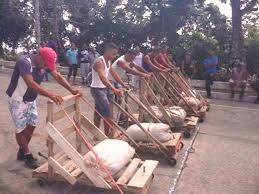
 Guantanamo.- The tires squeal as the cart descends from Alto de Cotilla toward Veguitas. The sharp curves and steep slopes of La Farola—the iconic mountain road connecting Baracoa with the rest of Cuba—demand skill, caution, and experience.
Among those who have mastered this challenging route is Ricardo Ramírez, a farmer and cart driver who has spent decades transporting goods along the winding highway using a unique homemade vehicle known locally as a chivichana.
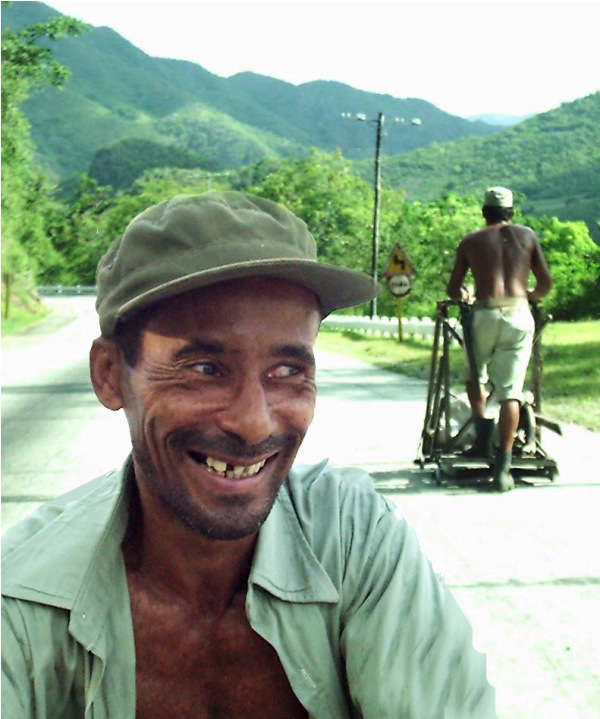
Ramírez says he created the first version of the device in 1963, when he was only 11 years old. Using wooden sticks, old ball bearings, and a large wheelbarrow, he built a cart that could carry agricultural products down the mountain.
Pulled uphill by an ox, the cart could later transport up to 1,500 pounds of produce with several people helping control its descent.
The simple but ingenious design relies on ropes for steering and a rubber brake at the rear, allowing drivers to slow the cart as it reaches speeds of up to 40 kilometers per hour.
Today, more than 20 chivichanas operate in the area between Alto de Cotilla and the Yumurí bridge, carrying products such as food, water, firewood, coffee, and palm kernels.
Ramírez acknowledges that the journey can be risky, recalling occasions when heavy rain or excessive loads caused the carts to become difficult to control.
Despite the challenges, chivichana drivers have learned to share the road safely with vehicles traveling along La Farola. When cars approach, they move aside and continue their descent—often receiving surprised looks from passing motorists unfamiliar with this unusual tradition.
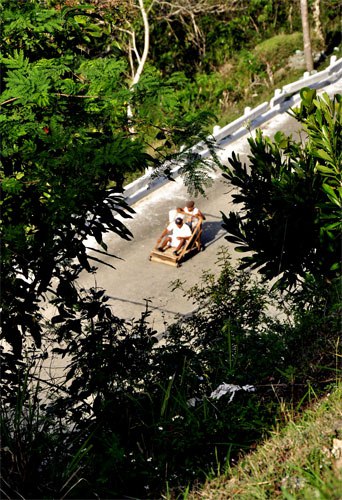
As darkness falls, Ramírez prepares to finish his journey. The trip down the mountain will take longer than usual after stopping to share the story of a creation that has become part of Baracoa’s rural identity and ingenuity.
Excerpted from the book Baracoa: Beyond La Farola, published by El Mar y la Montaña Publishing House, 2013.
