
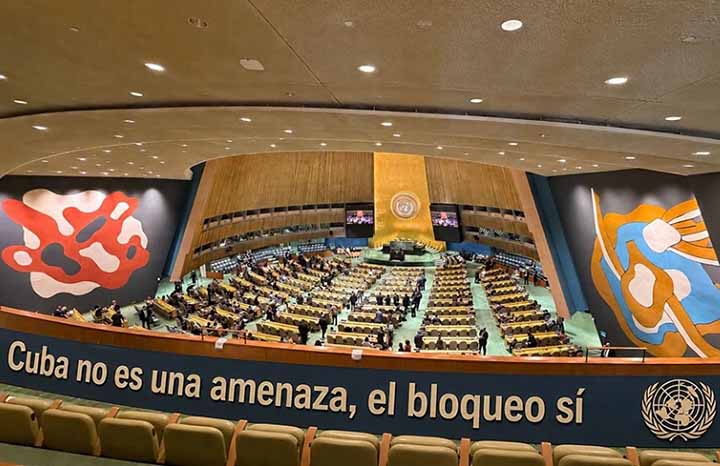
 Guantanamo.- From this Tuesday until tomorrow, October 28, the United Nations General Assembly will engage in discussions regarding a Cuban resolution that seeks to end the U.S. government’s longstanding blockade against Cuba. This annual multilateral forum exposes Washington’s diplomatic isolation, which arises from its unwavering commitment to uphold and escalate this policy.
It also underscores the global opposition to a coercive stance that transcends a bilateral issue, impacting third countries and even U.S. citizens.
Cuba has condemned the pressure and intimidation tactics employed by the White House to sway the debate and threaten those participating in the voting process. Cuban diplomats have characterized this unilateral approach as both absurd and ineffective, predicting its inevitable failure in the upcoming days.
End the blockade now. Let us live in peace. Cuba is not a threat. #CubaIsNotAThreat, the blockade is. https://t.co/mZt837ZRzL
— Cuban Embassy in US (@EmbaCubaUS) October 27, 2026
These unprecedented efforts to persuade nations that have consistently opposed the blockade—due to its infringement on international law—to alter their votes, abstain, or withdraw from the discussions occur against a backdrop of intensified collective punishment against the Cuban population. This includes an energy blockade and secondary sanctions targeting third parties that seek to engage with the island nation.
In a year where the severe repercussions of the blockade have become increasingly evident, the U.S. government has intensified its diplomatic efforts, employing direct pressure from the Secretary of State, threats of sanctions, and the potential for economic or political repercussions to influence the outcome of the debate.
