
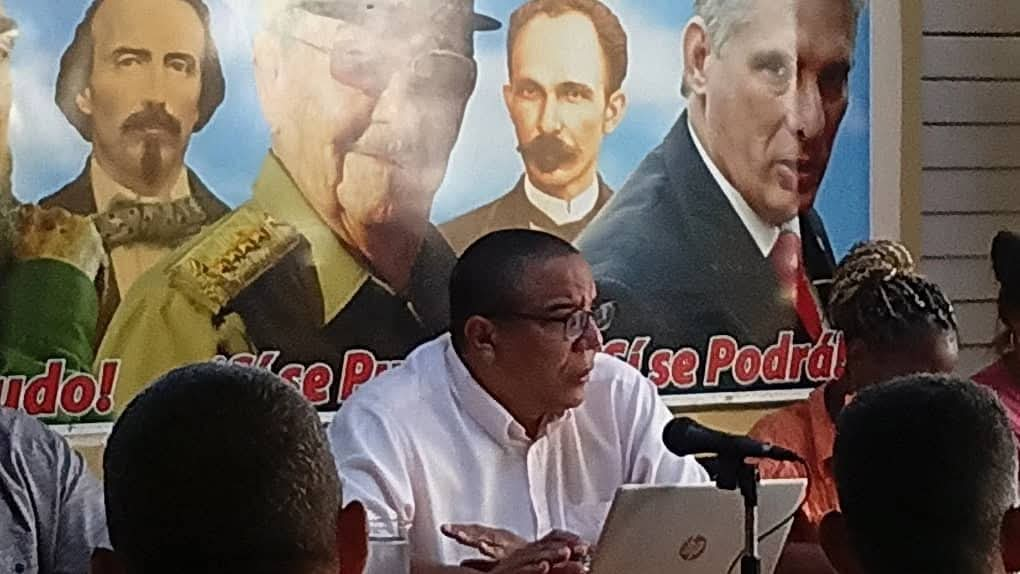
 Guantanamo.- Yoel Pérez García, First Secretary of the Communist Party of Cuba in Guantánamo Province, presided over a workshop on a university-led project aimed at advising the local government on the implementation of the 176 economic and social transformations recently approved nationwide.
Held at the Baracoa Agroforestry and Coconut Enterprise, the workshop focused on the university’s initiative to provide advisory support to local authorities as they carry out these transformations.
During the meeting, faculty members and students from the Municipal University Center reported on the progress made in preparing local officials. They also explained how they are coordinating efforts with various institutions, with science and innovation serving as the initiative’s central pillars.
In his assessment, the provincial Party leader stressed that Baracoa’s potential must be evaluated more objectively and that collective intelligence should be harnessed to promote sustainable development.
He also called for the development of projects based on local resources—initiatives that do not depend on outside inputs and that generate both economic growth and tangible benefits for the population. At the same time, he criticized proposals unlikely to produce results in the short term because of insufficient infrastructure and funding.
Pérez García emphasized that the current economic changes represent a timely opportunity for each municipality to generate revenue to support its own social development, provided that actions are specific and well coordinated among academic institutions, enterprises, and local government.
He urged stakeholders to explore sectors such as ecotourism, management of the local watershed network, agriculture, fishing, and coconut and cacao production—all valuable local assets that can contribute to the municipality’s development.
Government officials, public servants, professionals, and university students from Baracoa took part in the discussion, sharing their views on the progress achieved and the challenges ahead as they work to implement the 176 economic and social transformations and advance the municipality’s development in keeping with its potential, the country’s current circumstances, and the population’s needs.
