
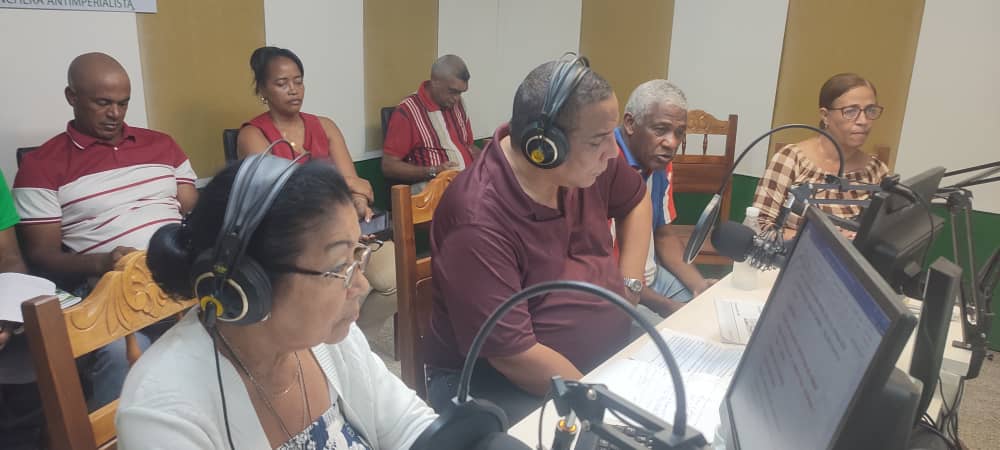
 Guantanamo.- Progress in implementing Guantánamo’s 176 economic and social transformations was highlighted by Yoel Pérez García, the province’s First Secretary of the Communist Party, during En Frecuencia con el Pueblo (In Tune with the People), a program broadcast by the Provincial Radio Station CMKS.
“Moving forward by harnessing our potential to produce goods and provide services for the population is part of the development strategy in every municipality,” said the province’s top Party official. He was accompanied by Governor Alis Azahares Torreblanca and other leaders from Cuba’s easternmost province.
Broadcasts by Radio Trinchera Antimperialista provided further details about these initiatives, which seek to modernize the country’s economic and social model. Among them is the payment of pensions to more than 20,000 retirees. A total of 1,368 economic actors are contributing to this effort, facilitating transactions and sparing older adults the need to travel to bank branches, thereby improving their quality of life.
Oscar Mendoza Pérez, provincial director of labor and social security, informed Guantánamo residents that more than 49,000 people in vulnerable situations had been identified. Food packages are being distributed to them as part of an effort to promote greater equity and social justice and ensure that no one is left without assistance.
The public was also encouraged to use the services available through the *Soberanía* (*Sovereignty*) platform, which provides access to public services. The platform complements the work of social workers, local delegates, and other officials responsible for collecting information and assessing individual cases.
The program also examined transformations in the agricultural and livestock sectors following the approval of the Law on Agricultural and Forestry Land, an initiative aimed at strengthening food sovereignty.
Alvernis Veranes, the province’s agricultural delegate, discussed measures that update the regulations governing the granting of idle state-owned land in usufruct. These measures are intended to streamline the process for both Cuban and foreign individuals and legal entities.
The official highlighted several projects currently underway, including the cultivation of approximately 500 hectares of rice and 30 hectares of potatoes in the municipality of Yateras, as well as efforts to expand pig farming.
Particular emphasis was placed on the “Sembrando Vida” (Sowing Life) project with Mexico, which is already benefiting more than 2,000 producers in Guantánamo. Participants will receive seeds, fertilizers, machinery, irrigation systems, and other supplies to increase agricultural production and improve the well-being of farming families.
Yoel Pérez García, head of the Provincial Party Committee, also discussed the Agricultural Development Bank initiative. The measure, which is scheduled for approval at the municipal level, is expected to benefit young people and women interested in pursuing opportunities in the agricultural sector—a key sector in the economic life of a nation facing a strict U.S. blockade.
The discussion also addressed changes in the food service, retail, and general services sectors. Seven neighborhood markets have opened—three in Baracoa, two in Maisí, and two in Yateras—while work continues to establish a wholesale supply market to boost wholesale trade.
During the program, José Ángel Calviño, director general of the Guantánamo Trade Business Group, explained that approximately 130 of the province’s 630 local ration stores have been designated to prioritize vulnerable residents.
The remaining stores are available to be managed by economic actors, while regulations intended to strengthen the Family Care System are being refined.
The program also highlighted the role of Community Charging Centers in mitigating the energy crisis. These centers provide facilities for cooking food and charging mobile phones, lamps, fans, electric scooters, electric tricycles, and other electric vehicles. Residents may also bring their own food to be cooked at the centers.
Regarding the transition to a new energy mix, Engineer Edel Aldana, technical deputy director of the Electric Company, reported that Guantánamo currently has 11 photovoltaic solar farms.
“These farms provide 40 megawatts of on-grid capacity, and work is underway at additional sites, including San Pedro, El Peral, and Jesús Lores in Imías,” he said.
Significant progress is also being made in repairing damaged electrical transformers across the province, as well as in restoring mini-hydroelectric plants and advancing other projects that will strengthen Guantánamo’s energy infrastructure.
