
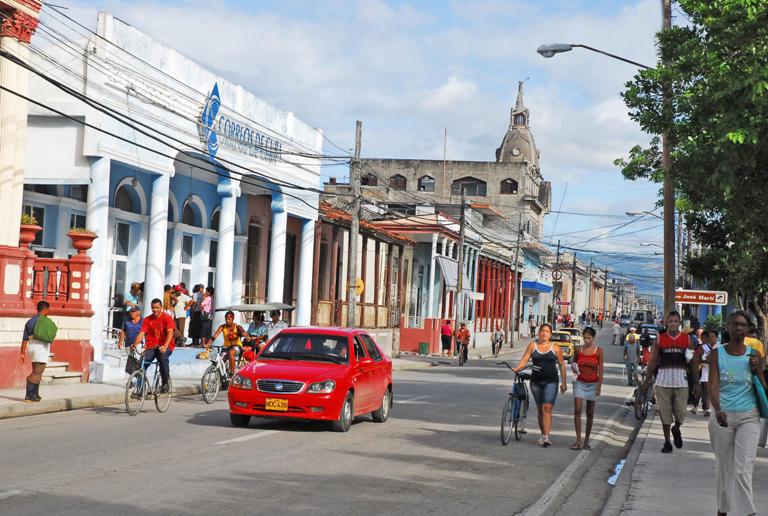
 Guantanamo.- Guantánamo province had an estimated resident population of 454,754 people at the end of 2025, according to Cuba’s National Office of Statistics and Information (ONEI). The total included 226,539 men and 228,215 women, representing a population density of 73.7 inhabitants per square kilometer and a year-on-year decrease of 10,675 residents.
The municipality of Guantánamo was the most populous, with 195,085 inhabitants, followed by Baracoa, with 71,958. Caimanera had the smallest population, with 10,129 residents.
Most of the province’s population lived in urban areas. The largest age group was people between 15 and 59, numbering 268,418. The working-age population totaled 272,353.
Fewer Births and More Deaths
The province continued to experience a decline in births. In 2025, 4,171 live births were recorded, compared with 4,236 in 2024.
At the same time, deaths increased to 5,059, up from 4,572 the previous year. Infant deaths also rose, from 31 in 2024 to 46 in 2025.
Migration Affects Population Trends
Internal and international migration have also played an important role in Guantánamo’s recent population changes.
The province recorded 1,615 intra-provincial migrations, with Manuel Tames reporting the highest figure, at 308. Interprovincial migration totaled 1,185 people. In addition, 7,413 residents emigrated abroad, while 1,606 people immigrated to the province.
These figures are not projections. They are calculated using a population-balance method: births are added to the previous year’s population, deaths are subtracted, and internal and international migration flows are incorporated into the total.
The Need for Updated Census Data
The population and housing census—normally conducted every 10 years—is the most comprehensive source of demographic information. However, the last census in Guantánamo took place in 2012. Logistical difficulties and other obstacles have delayed the completion of a new census, a process that would require substantial organizational and material resources.
Knowing the actual population of a territory is essential. Reliable, up-to-date demographic data provide the foundation for public policies and decision-making in areas such as healthcare, education, housing, employment, and infrastructure.
Guantánamo ended 2025 with 454,754 residents, a decrease of more than 10,000 people. The decline was influenced by fewer births, more deaths, and significant internal and international migration.
Although official population figures are updated annually through demographic calculations, the province still lacks a more comprehensive census, with the last one conducted in 2012.
