
 Guantánamo.- The situation facing most Cubans in 2026 is extremely difficult. In my view, this is the most challenging year of the Revolution, as the country confronts a tightening of the U.S. blockade and the Trump administration’s unrelenting economic and financial measures, imposed week after week.
The island is also facing an energy blockade; so far this year, only one oil tanker has been allowed to reach the country.
It is worth asking: What nation could withstand so many obstacles and such hostility for years?
Despite these hardships, Cuba is advancing 176 economic and social transformations, which serve as a guide in building and defending the country’s social project.
I emphasize the word “social” because the country’s leadership has made clear that these measures are not solely intended to redirect and strengthen the Cuban economy through greater efficiency in state-owned enterprises, alongside the participation of state and non-state economic actors and even foreign capital.
At the heart of these efforts is the expectation that the measures will have a tangible social impact, with particular attention given to those most in need.
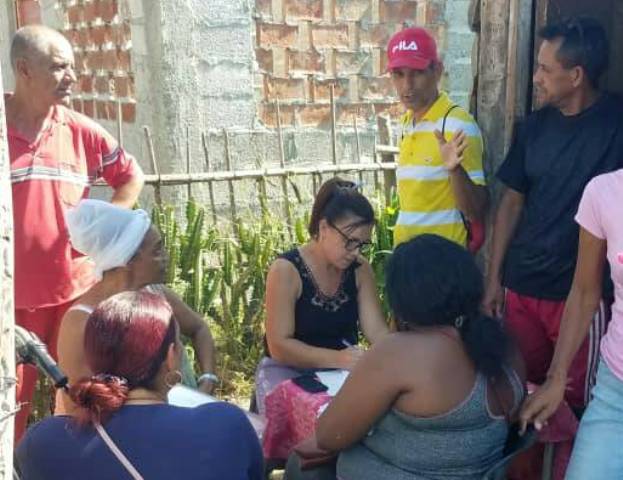
This is where efforts to identify and assess people living in vulnerable circumstances come in.
The Ministry of Labor and Social Security has established a methodology for identifying people in vulnerable situations in our neighborhoods and communities.
According to the document, the criteria include:
Households are eligible if their per capita income is below 4,000 pesos or if they face a substantial caregiving burden, defined in Ministry Decree 121 primarily as caring for people with severe, permanent, and irreversible disabilities.
Within eligible households, older adults and children receive priority for food assistance. By contrast, households are considered ineligible if they include people who are able to work but are unemployed, receive remittances from abroad, or have members employed in the non-state sector.
These are the main criteria social workers are applying in the current assessment process. They must remain committed to the mission entrusted to them by the Commander-in-Chief: to serve as “doctors of the soul.”
But are these requirements clearly understood—and, more importantly, applied correctly?
A meaningful sociodemographic assessment requires effective communication, especially at the community level, and compassionate, individual engagement—not simply filling out forms to satisfy paperwork requirements.
This is where key community stakeholders play a vital role: constituency delegates, presidents of the Committees for the Defense of the Revolution (CDRs), members of the Federation of Cuban Women, social policy support groups, and the natural community leaders who live among us.
Understanding each household and individual, including those facing particular challenges, health conditions, or precarious circumstances, is not the sole responsibility of social workers—whose efforts, regrettably, often fall short of their intended purpose.
This is a collective responsibility. Only by working together can we develop a more accurate social assessment and promote greater fairness.
A genuine sociodemographic study depends on effective communication, especially at the community level, and on sensitive, individual engagement—not simply on filling out forms for the sake of paperwork.
