
 Guantanamo.- After attacking Venezuela and kidnapping its constitutional president, Nicolás Maduro, Secretary of State Marco Rubio and Secretary of War Pete Hegseth are rushing to finalize agreements to send marines to Peru, Ecuador, Paraguay, Trinidad and Tobago, and the Dominican Republic.
The corollary with which President Donald Trump updated the Monroe Doctrine takes different forms. Strategies that mutate, but pursue the same goal: to regain control of the territory that the United States has always considered its “backyard” and to control the natural resources that are currently in dispute with other major powers.
One of the forms the Trump Corollary has taken involves the increased US military presence in Latin America and the Caribbean. The excuse: the fight against the current enemy, “narco-terrorism,” which has been proven false in Venezuela. Those in charge of carrying out this strategy—Secretaries Rubio and Hegseth—have already begun it, and now they want to consolidate it.
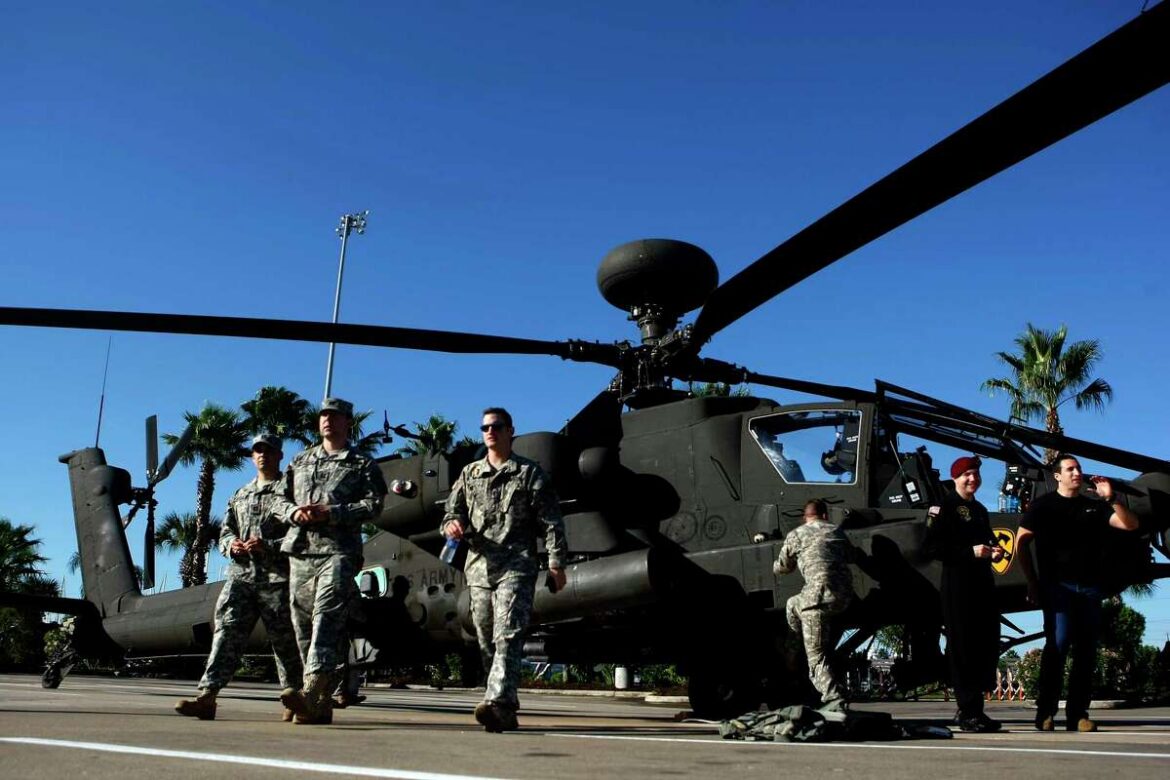
The attack on Venezuela, which concentrated the largest military deployment Washington has ever made in the region in the Caribbean Sea, with the presence of aircraft carriers, troops, and even a nuclear submarine, is also accompanied by the deployment of marines to Peru, Ecuador, Paraguay, Trinidad and Tobago, and the Dominican Republic.
Dominican Republic
On November 26, during his visit to the Dominican Republic, Secretary of Defense Pete Hegseth thanked President Luis Abinader for supporting a “temporary agreement” that allows the United States to deploy troops on Dominican territory.
This is “a great collaboration and, truly, a joint effort between our two countries against drug trafficking and narco-terrorism,” Hegseth stated.
Along the same lines, President Abinader asserted that there is “a threat that knows no borders, that does not distinguish flags, that destroys families, and that, for decades, has attempted to use our territory as a route. That threat is drug trafficking, and no country can, nor should, confront it without allies.”
According to a statement on the official website of the Dominican Republic’s Presidency: “The United States Southern Command and Air Force will provide refueling and airlift aircraft to support counter-narcotics operations, including Operation Southern Spear, announced by Secretary of Defense Pete Hegseth on November 13, which also combats illicit arms trafficking.”
This collaboration aims to disrupt the illicit operations of transnational criminal organizations (TCOs) and foreign terrorist organizations (FTOs), identified by the United States, along various routes spanning the entire Caribbean Sea,” the text adds.
It also emphasizes that “several KC-135 tanker aircraft will be present to support air patrol missions, expanding monitoring and interdiction capabilities over a large portion of the maritime and air domains, and will provide refueling services to aircraft from partner countries, thus ensuring sustained operations for monitoring, detecting, and tracking verified illicit smuggling activities.”
Additionally, the official statement reads, “C-130 Hercules cargo aircraft will facilitate aeromedical evacuations, firefighting, meteorological reconnaissance, and disaster relief.”
Trinidad and Tobago
A few days later, on November 29, according to the Trinidad and Tobago Guardian website, Prime Minister Kamla Persad-Bissessar confirmed that the United States had installed “a new radar to monitor activities inside and outside Trinidad and Tobago.”
The radar was located at ANR Robinson International Airport, a few kilometers from the Venezuelan coast.
According to the Zona Militar website, “Authorities in Trinidad and Tobago recently confirmed that the U.S. Marine Corps is reinforcing its local presence with the deployment of an AN/TPS-80 G/ATOR radar.”
The assistance is part of an agreement between the two countries to increase surveillance capabilities against illegal flights directly linked to narco-terrorist organizations and the growing tension with Venezuela.
According to reports, marines from the 22nd Expeditionary Unit, who were there for joint exercises in mid-November, remain in Trinidad and Tobago.
The website highlights that, in addition to the ground component, the Marines have air assets such as helicopters and fifth-generation F-35B Lightning II fighter jets, as well as amphibious assets from the U.S. Navy and aircraft from the Air Force.
