
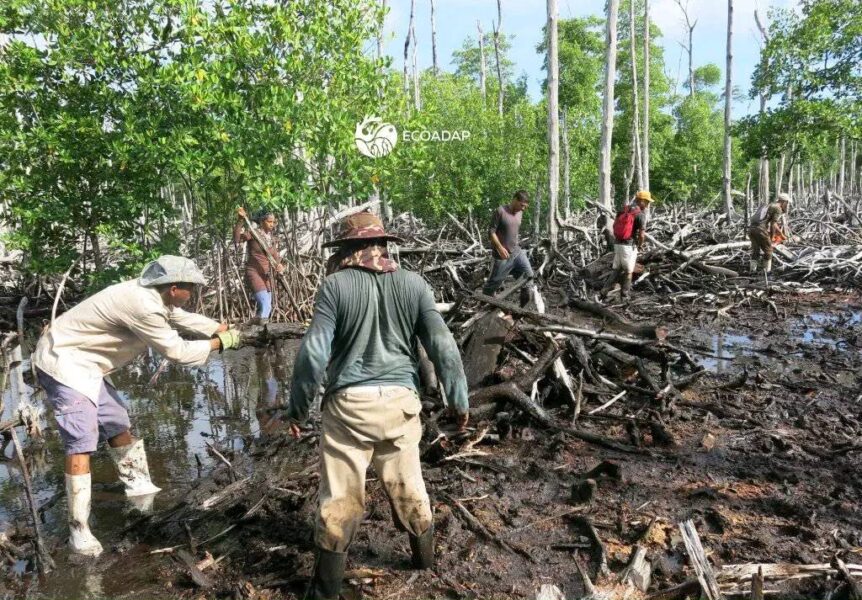
 Guantanamo.- Workers from the Baracoa Conservation Department of Alejandro de Humboldt National Park are working to protect and care for mangroves, recognizing the importance of these ecosystems for biodiversity.
Among their efforts is work in coastal communities located within what is considered Cuba’s most important protected area, as well as in the Yara-Majayara Outstanding Natural Feature and other areas distinguished by their geographical and cultural characteristics that demand preservation.
In these communities, they foster close ties with community leaders, schools, and local producers, who become key players in activities such as collecting mangrove seeds for planting, among others.
These activities, held to commemorate important dates such as the World Environment Day, the World Biodiversity Day, and the Earth Day, also include the participation of sociocultural projects, workers, and students from various educational levels.
Mangroves play a vital role in protecting coastlines from wind and wave erosion and are home to a large number of aquatic, amphibious, and terrestrial organisms.
These coastal ecosystems are important areas of life, because they constitute permanent habitats for hundreds of species of fish, mollusks, and crustaceans, or temporary habitats for migratory birds from both north and south; hence the importance of protecting them.
📸 Baracoa Conservation Department of the PNAH
