
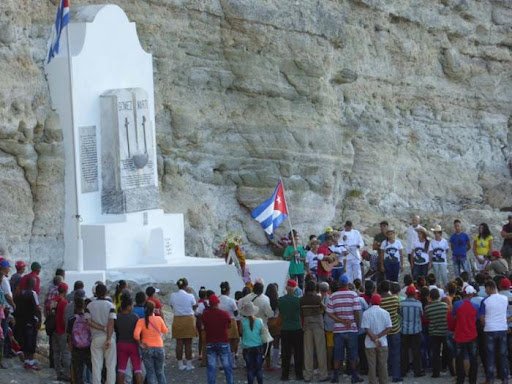
 Guantanamo.- On April 11, 1895, the small beach of Cajobabo, in the municipality of Imías, Guantanamo Province, became a historic site for Cuba with the landing of José Martí and Máximo Gómez. This event marked the beginning of the Necessary War, after years of preparation by the Delegate of the Cuban Revolutionary Party.
Martí, the Apostle of Independence, and Gómez, a prominent military strategist, arrived from the Dominican Republic aboard the schooner Brothers, facing dangers due to Spanish surveillance.
Martí described his arrival as a moment of “great joy,” and this act strengthened the Cuban independence movement. Shortly afterward, the revolutionaries established camps in the region, and on April 15, Martí was promoted to Major General of the Liberation Army, receiving the Cuban flag and the horse Baconao, symbols of the struggle for independence.
The site has been recognized as a National Monument since 2003 and is a place of pilgrimage for generations of Cubans. In 1995, Fidel Castro paid tribute on the centennial of the landing, reaffirming his commitment to Martí’s legacy. La Playita de Cajobabo not only represented a key point in the war of liberation, but also the consolidation of Martí as an illustrious leader, keeping the patriotic spirit alive in each annual commemoration.
