
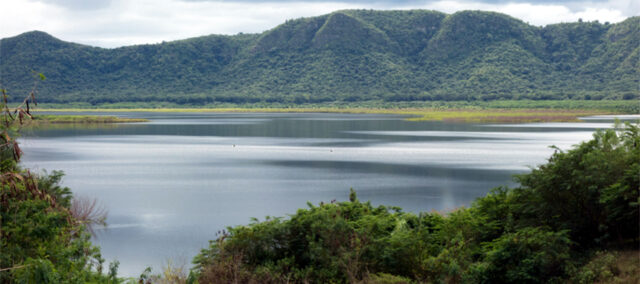
 Guantanamo.- The La Yaya Dam—the reservoir with the largest capacity in Guantánamo—received 12.6 million cubic meters of water during the heavy rains in November. It benefited the most from the rainfall, which had reached a provincial total of 307 millimeters by November 17.
The additional water brought the total volume stored in the province’s six reservoirs to 22.077 million cubic meters (m³), equivalent to 88.44 percent of their combined capacity. Meanwhile, the municipalities of Imías, San Antonio del Sur, and Manuel Tames—which had previously reported drought conditions—have seen their water sources recover. This is particularly significant for both local residents and economic activity.
Five of the six reservoirs are currently more than 50 percent full. The exception is Pozo Azul, which is at 22.84 percent of capacity. The Los Asientos Dam, located in San Antonio del Sur, is the only reservoir currently overflowing—a situation that has continued since the rains in October.
The 2026–2027 winter season, which was forecast to bring heavy rainfall, is living up to expectations. According to Marvelis Lescaille Morel, the province’s deputy delegate for Hydraulic Resources, recent flooding in low-lying areas and rising river levels reported in several municipalities do not currently pose a threat to the population.
Authorities are advising households to boil water intended for human consumption because of its high turbidity and the lack of treatment with chlorine gas or sodium hypochlorite. These supplies are in short supply at the provincial water and sanitation utility, which attributes the shortage to the economic blockade imposed by the United States on Cuba and its population.
