
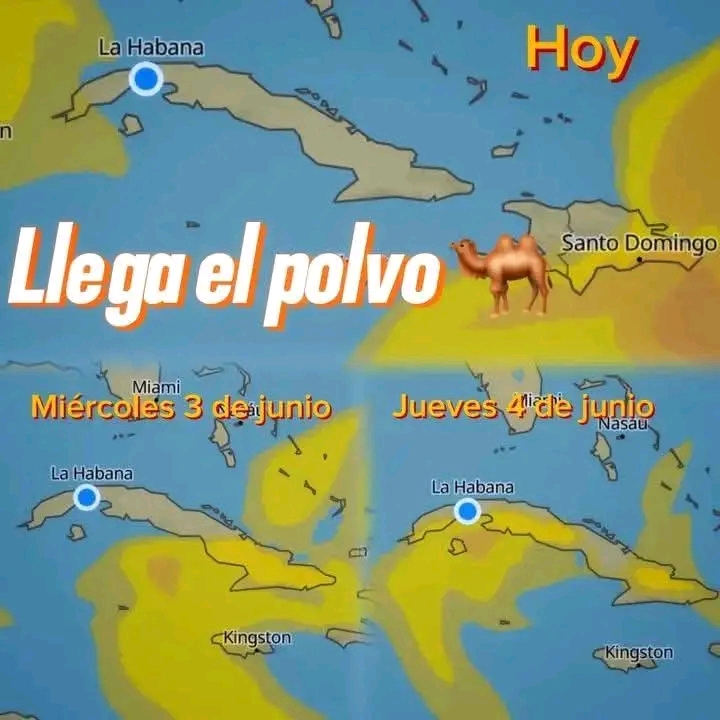
 Guantánamo.- The first waves of dust originating from the Sahara Desert, located on the African continent, are beginning to affect our geographic area. The most significant dust event of the season is expected to make landfall in the coming days, with the greatest impact on eastern Cuba and mild to moderate effects across the rest of the country.
Under the influence of this dust, skies will become hazy, and the air will turn drier and warmer, leading to rising temperatures and limited rainfall in affected regions.
Health Impact:
– Irritation of the eyes, nose, and throat.
– Worsening of respiratory conditions, including asthma; increased sneezing and congestion.
– High-risk groups: children, the elderly, and individuals with chronic respiratory illnesses.
Recommendations:
– Avoid prolonged outdoor exposure, especially during peak dust concentrations.
– Stay well hydrated and wear protective eyewear when outside.
– Asthma sufferers and those with respiratory diseases should carry their medications and seek medical advice if symptoms worsen.
– Ventilate indoor spaces during periods of lower dust presence, and use high-quality filters or masks outdoors if possible.
Each year, over 100 million tons of Sahara Desert dust lift from its vast dunes to travel hundreds of kilometers, reaching territories in Europe and the Americas. This natural phenomenon, characterized by mineral-rich Saharan dust, is a critical component of various ecosystems and occurs repeatedly throughout the year.
The Sahara Desert, recognized as the largest desert in the world, spans approximately 9 million square kilometers across eleven North African countries: Algeria, Egypt, Chad, Libya, Morocco, Nigeria, Sudan, Mali, Western Sahara, Mauritania, and Tunisia.
Saharan dust arises from a combination of meteorological factors typical to the region. Frequent sand and dust storms in this arid environment generate a layer of dry, hot air containing sand particles that can rise several kilometers above the earth’s surface.
Atmospheric currents then transport this dust cloud over long distances, enabling it to reach distant continents like Europe and the Americas, where it influences air quality and contributes to the fertilization of certain ecosystems.
Information sourced from the Risk Reduction Management Center profile.
