
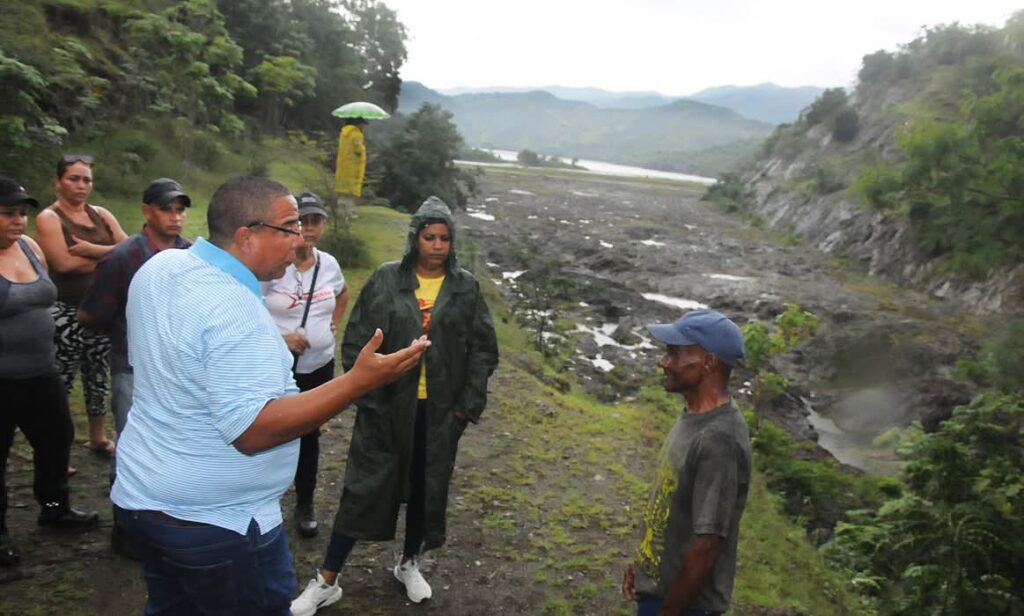
 Guantanamo.- Yoel Pérez García, First Secretary of the Communist Party in Guantánamo province, urged greater awareness of risk during his visit to San Antonio del Sur and Imías. He examined the actions taken due to the heavy rains hitting this eastern part of the country—stemming from an upper-level trough in the troposphere and a surge of moisture from the Caribbean Sea.
In both places, he stressed the importance of keeping everyone updated using every possible means—especially in remote or vulnerable communities. Protecting human life and resources must be the focus. He called for loudspeaker vehicles, amateur radio networks, and other communication methods to ensure that.
He also ordered arrangements to provide healthcare for those sheltering in private homes, with neighbors, or in emergency centers—paying special attention to pregnant women, children, and the elderly.
Pérez García’s tour included a stop at the Los Asientos dam in San Antonio del Sur. The reservoir currently holds 16 million cubic meters of water out of a capacity of 17.5 million. He urged that hydrological and meteorological monitoring be stepped up to manage any overflow risks.
In Imías, he called for constant monitoring of the river running through the municipal seat, given the risk of water surges from the mountains.
This Sunday, during a routine review of the province’s economic and social stability, specialists from the provincial weather center confirmed that rainfall is set to continue across all municipalities, which have already seen considerable cumulative totals. Regarding the reservoirs, they reported that, on average, they are over 80 percent full. Some, like La Yaya—the largest in the province—and Jaibo, hold substantial water volumes (in millions of cubic meters); Jaibo particularly needs a technical assessment.
Attention focused on transport and the need for four-wheel-drive vehicles within the Defense Zones and Municipal Defense Councils. Plans were also made to mobilize equipment to clear the La Farola viaduct after landslides were reported near Imías—where rain is already falling. Drivers are advised to use this road only for extreme emergencies.
During the regular meeting about the situation in Guantánamo province, officials looked over the availability of medical services in areas at risk of isolation. They talked about reinforcing supplies—like medical-grade oxygen and medications—caring for infants and pregnant women by relocating them to safe places, and ensuring drinking water access for the population.
