
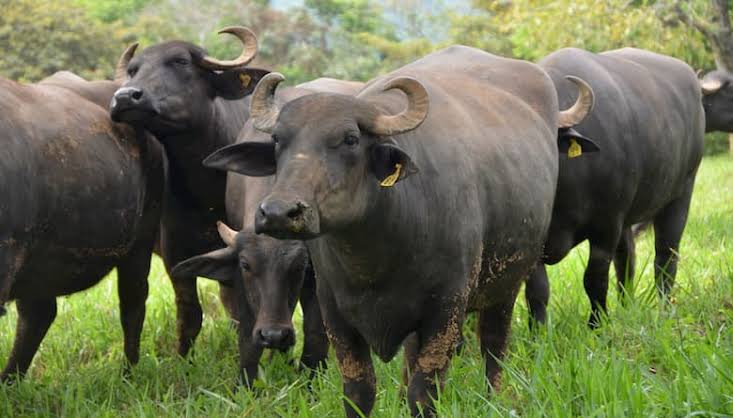
 Guantanamo.- The buffalo development program continues to advance in Guantánamo through the establishment of new production units, an increase in the number of females and the overall herd, and improved biological and production indicators—particularly birth and mortality rates.
Jorge Luis Mendoza Viñales, deputy director of the Animal Kingdom division at the Territorial Delegation of Agriculture, told *Venceremos* that the province currently has 29 buffalo units. Of these, nine are dedicated to milk production, three to fattening, and the remaining 17 to breeding and herd development.
Five additional centers are scheduled to be established this year. Two are already in operation, both in the municipality of Niceto Pérez at the Iván Rodríguez Livestock Company, the province’s main center for promoting buffalo farming. The other three are expected to be prepared soon: two in Manuel Tames and one in Maisí.
Mendoza Viñales explained that the units in Manuel Tames, belonging to the Ciro Frías Basic Business Unit, are expected to receive their animals in October, while the Maisí unit is scheduled to do so in December.
The buffalo development program aims to reach 35 units by 2030—a target that is virtually assured. Once the three remaining units planned for this year are established, the province will have 32, leaving only three more to meet the goal. That target may well be expanded to sustain the progress of a species regarded as key to the future of large-scale livestock production in the territory.
The deputy director also noted that, in 2025, the province ranked second nationally in its buffalo birth rate, reaching 89.8 percent. Maintaining that achievement remains a priority this year. By mid-September, at the beginning of the calving season, 55 births had already been recorded toward an annual target of 400.
In Niceto Pérez, disused dairy farms have been adapted for buffalo production, generating significant savings in resources while making use of existing facilities.
