
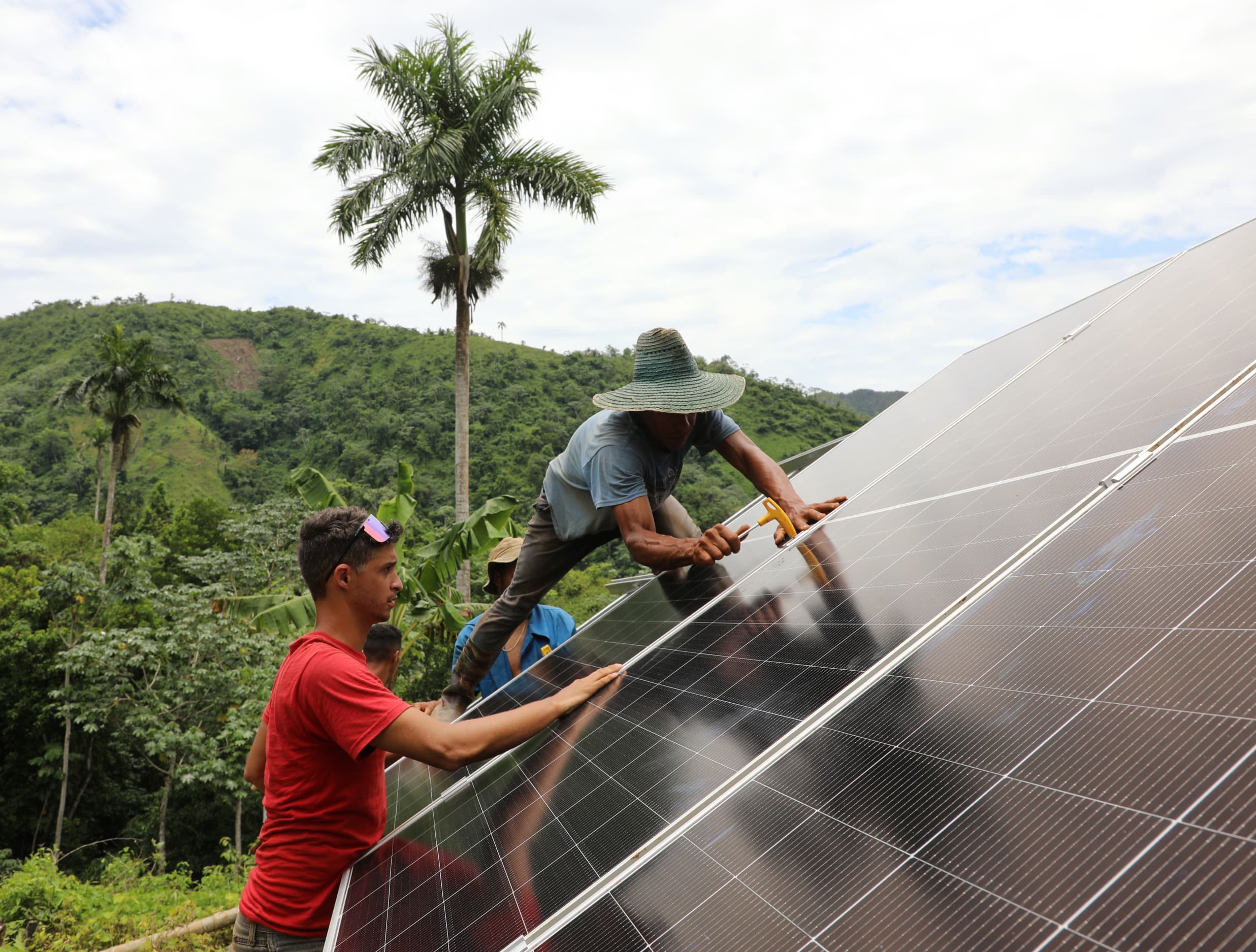
 Guantanamo.- In the remote area of Jalda del Macho, located in the municipality of Maisí, access is a significant challenge.
There are no roads leading to this rugged terrain, nor are there paths that allow for easy passage without the risk of slipping on stones and roots.
Here, the landscape seems to resist any attempts at modernization, although electricity is gradually making its way into the community.
For the past few weeks, a team from the National Electric Union (UNE) has been carrying the promise of light on their shoulders—not through traditional cables a0nd poles, but via photovoltaic panels that are being meticulously transported up the steep mountainside.
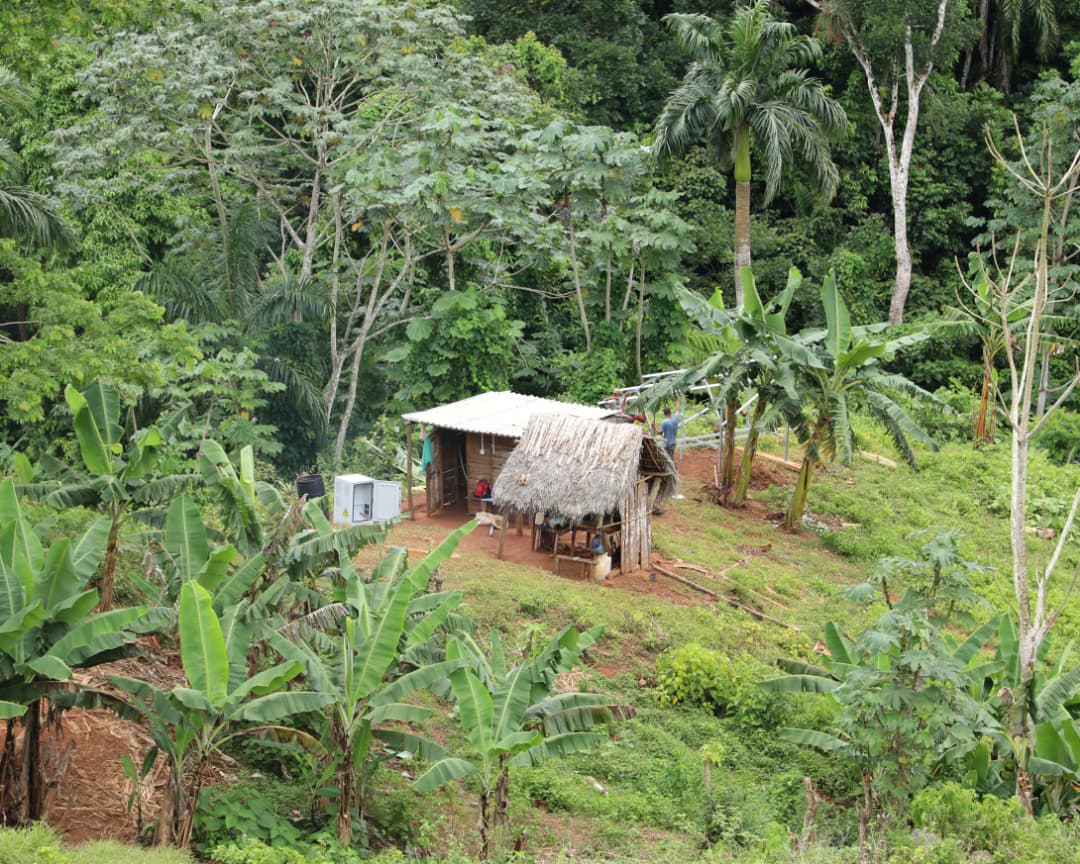
The process is painstaking and deliberate, resembling a ritual where each fragile unit is handled with utmost care. With no vehicles or pack animals available, the brigade relies solely on human strength, moving in single file with their backs strained and eyes set on the distant horizon.
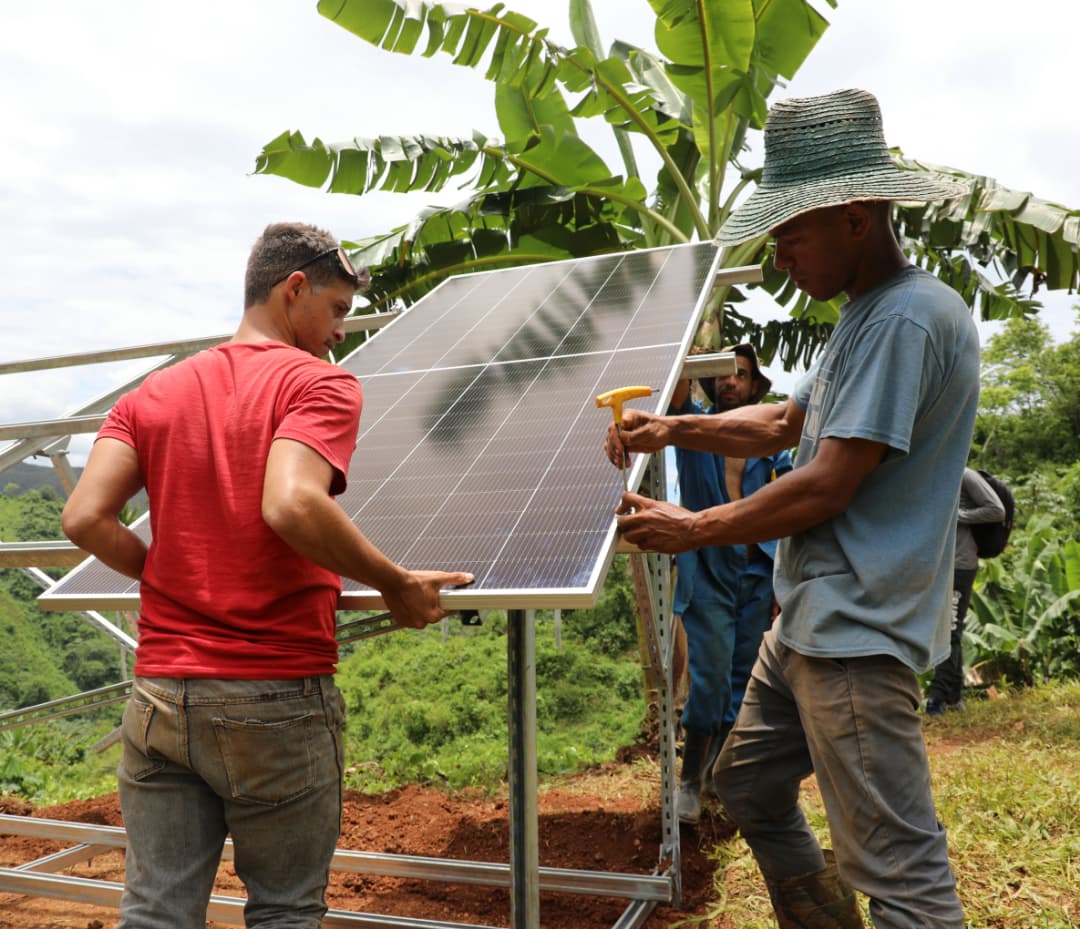
The mission extends beyond merely installing electrical systems; it represents the potential for brighter futures—enabling residents to light a bulb, charge a phone, or preserve food.
In such hard-to-reach areas, energy is not a given; it is earned through relentless effort.
The brigade is not alone in this endeavor; local farmers, familiar with every path and shortcut, have become essential guides. Their knowledge transforms the arduous journey into a more manageable task, highlighting the collaborative spirit that emerges when state infrastructure meets community resilience.
