
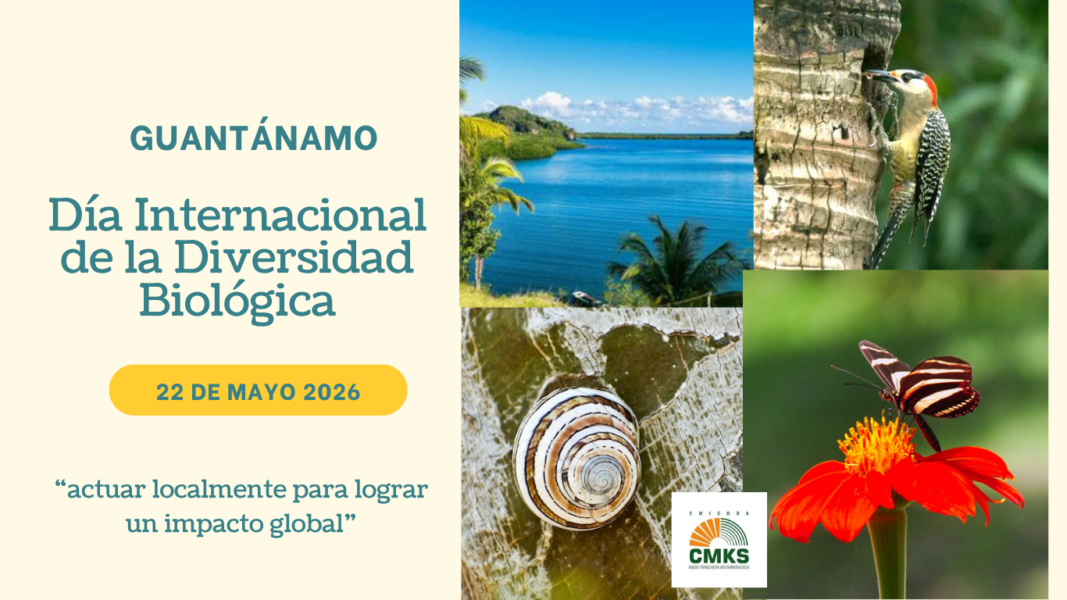
 Guantanamo.- The territorial strategy for biodiversity aims to safeguard plants, animals, and humans, who are also vulnerable to harmful gas emissions and exposure to hazardous waste, emphasized environmentalists from Guantánamo in recognition of World Biodiversity Day.
This perspective was shared by Mario Montero Campello, a representative of the Antonio Núñez Jiménez Foundation for Nature and Humanity, during a discussion with members of the National Union of Architects and Engineers of Construction (UNAICC) on this significant occasion, established by the United Nations nearly two decades ago.
In collaboration with Annielis García González, a specialist from the Ministry of Science, Technology, and Environment (CITMA), Montero, who is also a Consulting Professor at the Guantánamo University of Medical Sciences, highlighted the scientific community’s efforts in the province to preserve its natural wealth.
They acknowledged key organizations such as the Center for Mountain Development, the University of Guantánamo, and the Base Scientific and Technological Unit (UCTB), which focuses on the sustainable use, management, and conservation of soil in Cuba’s easternmost region.
Guantánamo is home to a rich diversity of flora and fauna, particularly in the Nipe-Sagua-Baracoa massif and the southern coastal area, and it leads initiatives to protect endangered species, including the almiquí, an insectivore regarded as a living fossil.
In areas adjacent to Guantánamo Bay, the Eastern Center for Ecosystems and Biodiversity (BIOECO) collaborates with the Center for Applied Research to further these conservation efforts, which ensuring that local enterprises and producers are informed about the detrimental effects of sodium salts resulting of their productivity.
