
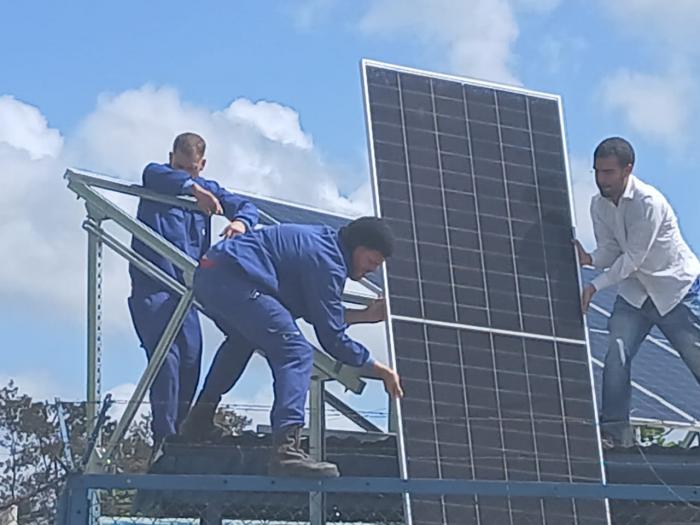
 Guantanamo.- Cuba is currently grappling with a crisis intensified by the U.S. blockade and energy embargo, prompting urgent economic reforms and the implementation of policies aimed at ensuring the nation’s sustainability and development. In response, the country is rapidly shifting its energy mix, prioritizing the transition to renewable sources, especially solar energy.
Solar power is not a novel concept for Cubans; the eastern province of Guantánamo was among the pioneers in adopting solar technology. Over thirty years ago, the region installed its first solar panels in social facilities and homes, thanks to initiatives led by CubaSolar and the Center for Technological Applications for Sustainable Development (CATEDES).
These early projects primarily benefited state entities and rural communities, equipping numerous medical clinics and schools with photovoltaic systems, and even integrating wind turbines in some cases. However, these initiatives faced challenges due to a lack of sustainable supplies for batteries and essential components.
Currently, Cuba has established a comprehensive strategy for transitioning to clean energy by 2050, supported by Resolution 180 of 2026 from the Ministry of Finance and Prices.
This resolution facilitates the import and sale of renewable energy technologies and offers a one-year tax exemption for individuals and entities, administered by the ONAT, to encourage investment, particularly in the social sector.
