
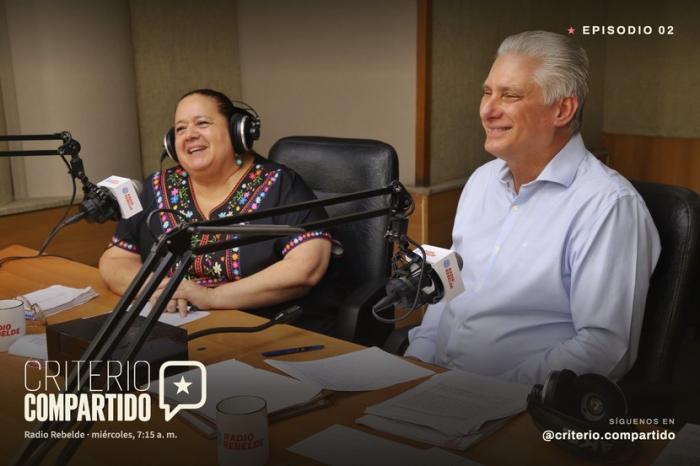
 Guantanamo.- The second broadcast of the radio program Criterio Compartido reaffirmed the idea that working for the common good should serve as a compass for finding homegrown solutions—by placing people at the center of decision-making and delivering collective benefits through the unity that characterizes the Cuban people and their leaders.
For this reason, Miguel Díaz-Canel Bermúdez, First Secretary of the Central Committee of the Communist Party of Cuba and President of the Republic, devoted much of his dialogue on Wednesday with journalist Bárbara Betancourt to addressing citizens’ concerns, proposals, and experiences.
The program received more than 50 calls covering a wide range of issues, including vulnerable individuals, food production, basic services, banking, popular oversight, and community work.
During the program, broadcast by Radio Rebelde and the National Radio Network, the Cuban president reaffirmed that communities are key spaces for implementing economic and social transformations. It is within communities that people live together, organize, and develop solutions—even amid the intensification of the U.S. blockade against the island, which Cuban authorities describe as genocidal.
Díaz-Canel highlighted the importance of community organization and citizen participation. In this context, he spoke by telephone with Pedro Lizardo Garcés, president of the La Rampa Popular Council, who explained the work being carried out to support older adults, collect solid waste using electric tricycles, and mobilize neighborhood solidarity.
The Cuban president defended the Revolution’s humanitarian commitment to assisting everyone. He also reported that a recent assessment identified more than 800,000 people requiring specialized attention.
He further referred to approximately 32 social programs aimed at addressing various family-related challenges.
During the Criterio Compartido broadcast, Díaz-Canel called on grassroots Party organizations to be more proactive and become more dynamically involved in supporting those in need.
He also urged officials to listen to the people and address their concerns with sensitivity, ensuring that the responses provided by institutions and government bodies remain firmly rooted in social justice.
