
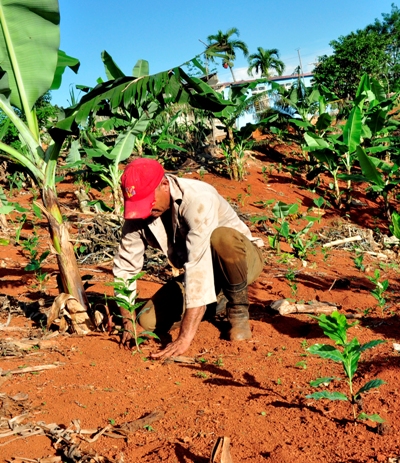
 Guantanamo.- Strengthening cooperatives is another essential component of Cuba’s economic transformation. During Wednesday’s broadcast of the Mesa Redonda (Round Table) program, Minister of Agriculture Ydael Pérez Brito noted that more than 80% of the country’s agricultural land is managed by individual farmers or cooperative members. Their success, he emphasized, is therefore crucial to increasing production.
The new regulations seek to place cooperatives on a more equal footing with other economic actors while granting them greater autonomy and flexibility in managing their operations.
The aim is to enable cooperatives to establish partnerships with other producers and economic actors, facilitate production, and participate in new forms of commercialization.
These changes introduce a more market-oriented approach to the sale of agricultural products. The minister explained that the goal is to promote agreements between buyers and sellers and move beyond systems based exclusively on price caps.
This does not mean abandoning the system’s social mission. Priority destinations will continue to include food supplies for the general population, children, hospitals, and other programs and allocation plans established at the local level.
At the same time, the new approach seeks to ensure that producers can recover their investments and obtain the resources they need to continue developing their operations.
In this context, the regulations are intended to prevent purchasing monopolies and expand producers’ opportunities to market their goods to a wider range of buyers.
For example, cooperatives will be able to establish direct sales agreements with the industrial sector, the tourism industry, markets, and other outlets. Contracts are also planned for products such as dairy and meat, as well as for surplus produce destined for entities involved in food processing.
Cooperative Members and Their New Powers
Regarding the perspective of cooperative members, the minister stated:
“It is very positive. They now have many more powers. The new framework also streamlines procedures and makes it possible to get things done more quickly. There is a great deal of interest among producers today. As I explained, we already have applications covering more than 15,000 hectares.
“We are also pleased—and we state this clearly to our people—to be actively seeking out good producers, both within and outside our own system. We identify those who have the necessary conditions, explain the projects to them, and then begin operations on the land.
“This includes approaches such as contract farming and the creation of stronger value chains. In short, we must turn our attention to the land. This is a crucial issue, and we must succeed in increasing production.
“If we increase production, we can balance supply and demand, improve prices, process food, export, replenish supplies, and replace imports. But to achieve this, we must produce—and production takes place on the land.
“Agriculture is a fundamental primary sector for economic transformation and development. It is decisive. With these reforms, the sector can move forward.”
