
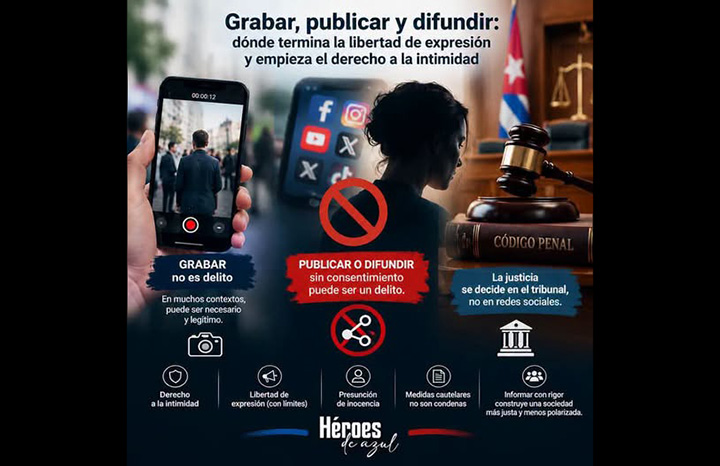
 Guantanamo.- The Ministry of the Interior (MININT} highlighted on its Facebook profile that recording with a phone does not constitute a crime; however, publishing or disseminating images without consent can amount to a violation of personal and family privacy.
The agency underscored that legal cases are not decided on social media and noted that the distinction between documenting and exposing is key to understanding proceedings regarding the non-consensual dissemination of images.
It reiterated that freedom of expression and the right to information are fundamental but not absolute, as a person’s image is part of their private life, and its unauthorized dissemination can be subject to legal sanctions.
The Penal Code defines crimes against personal and family privacy; therefore, it is not the act of recording that is prosecuted, but rather the non-consensual publication of the image, the institution clarified.
The Ministry of the Interior explained that such proceedings can arise from a private complaint—when the affected party takes legal action—and that the presumption of innocence applies to both the accused and the complainant.
It indicated that precautionary measures applied in some cases, such as house arrest or a ban on leaving the country, are provisional and do not constitute a pre-judgment or early conviction.
