
 Guantanamo.- There are dates of profound significance indelibly etched into the collective memory of a people. For the citizens of Guantánamo, August 4th stands as one such date.
It is not only a day of mourning but also one of patriotic reaffirmation—where sorrow transforms into resolve, and history becomes vividly present.
In 1957, Cuba was engulfed by the iron-fisted dictatorship of Fulgencio Batista, while in the shadows, the 26th of July Movement was meticulously organizing resistance.
At the heart of Guantánamo City, specifically at 751 Aguilera Street, between San Gregorio and Santa Rita, a clandestine bomb-making workshop was in operation.
Fate, both capricious and tragic, decreed that on August 4th, an accidental explosion would turn this workshop of liberty into a death trap. The blast was so powerful that it reverberated throughout much of the eastern region.
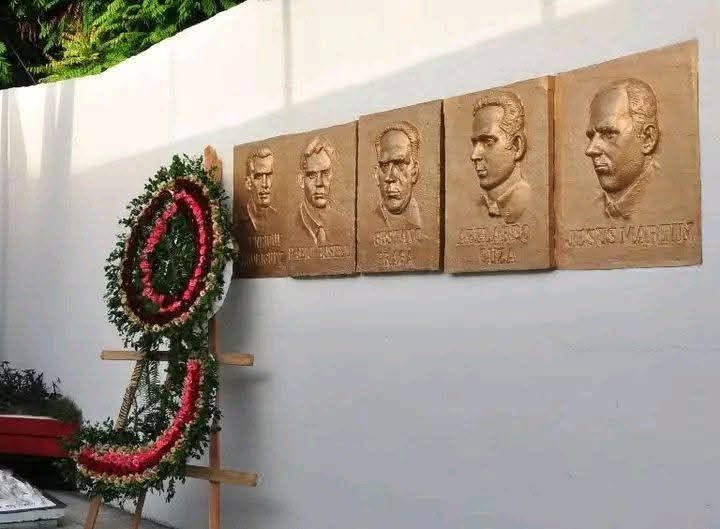
Inside the building, death claimed two young revolutionaries instantly: Fabio Rosell del Río and Gustavo Fraga Jacomino.
Yet the tragedy did not end with the explosion. Enrique Rodríguez Picaso, gravely injured, was subsequently executed by the henchmen of the regime.
The cruelty of Batista’s forces knew no limits. Jesús Martín and Abelardo Cuza, two dedicated comrades who rushed to aid the fallen, were also arrested and murdered by Batista’s soldiers.
Five martyrs, five lives cruelly cut short, five acts of courage that came to symbolize the struggle of an entire people.
At the very location where this tragedy unfolded stands an obelisk that perpetuates their memory. Revered by the people of Guantánamo, this monument serves as the focal point for the annual commemoration. It is not a cold structure but a living altar where citizens gather to remember that freedom demanded a heavy price—and that price was paid in youth.
Each year on August 4th, the traditional popular pilgrimage winds solemnly through the streets of Guantánamo City—from the city center to the monument. This human tide does not parade; rather, it proceeds with the reverence befitting sacred ground.
During the political and cultural ceremony, the highest provincial and municipal authorities join the martyrs’ families, political and mass organizations, representatives of the Revolutionary Armed Forces and the Ministry of the Interior, as well as the general public, to pay homage to those who fell.
The commemoration extends beyond its immediate context, blending art and culture. The Political Song Festival, held annually from August 1st to 4th, culminates on this day. Troubadours and artists gather at the foot of the obelisk to transform remembrance into song.
In honoring the martyrs, new generations reaffirm their commitment to contemporary struggles—advancing economic efficiency and resisting subversive campaigns targeting Cuba. As echoed each year in the speakers’ messages, the courage of those young people in 1957 is not a relic of the past but a source of inspiration for the present.
Today, as in the past, the people of Guantánamo demonstrate that their heroes are neither dead nor forgotten; they live on in the enduring memory of their community.
