
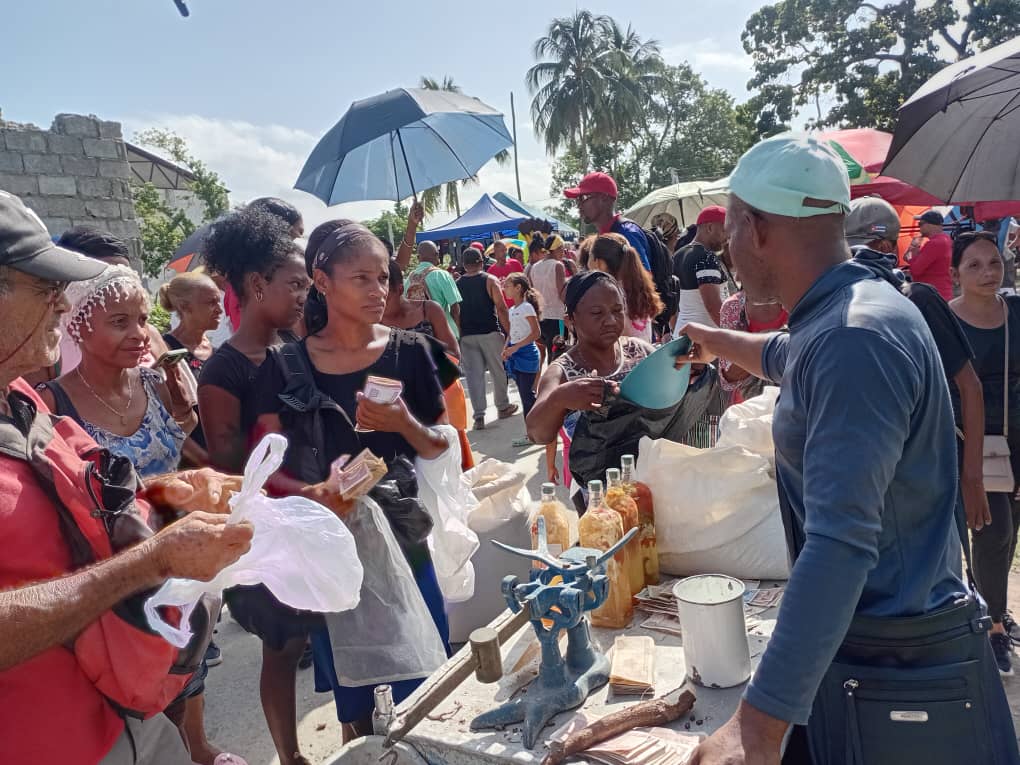
 Guantanamo.- Residents of the El Salvador municipality eagerly await each week’s Agropecuary and Industrial Fair, a gathering that has firmly established itself as a family-friendly event.
Organized by the Party, the Government, and the agriculture sector alongside various productive forms, the fair offers a wide range of products including tubers, fruits, vegetables, handicrafts, and industrial goods, complemented by engaging cultural activities.
“The Fair is not only a space for family and friends but also an opportunity to find options without leaving home,” emphasize the organizers.
However, this joyful occasion is overshadowed by growing concerns among attendees: many self-employed workers (TCP) and micro and small enterprises (Mipymes) refuse to accept digital payments despite it being a legal requirement.
This practice directly affects consumers amid a severe cash shortage and contradicts Resolution 93/2023 from the Ministry of Internal Commerce, which mandates the availability of digital payment options.
National efforts prioritize expanding digital access to mitigate the notable cash deficit, yet locally, non-compliance remains prevalent, with some vendors accepting only cash or transfers under abusive conditions.
The ongoing resistance impedes the banking process aimed at providing society with access to financial and payment services.
Refusal to accept digital payments harms families attending the fair and encourages money circulation outside the banking system, posing economic challenges for Cuba.
In response, fair organizers call on responsible authorities to enforce the law effectively, demanding thorough oversight to ensure all vendors provide electronic payment options.
This issue should not overshadow the efforts made in El Salvador to enable residents to purchase essential products every Thursday, ensuring the fair continues as a valued community tradition in this Guantanamo municipality.
