
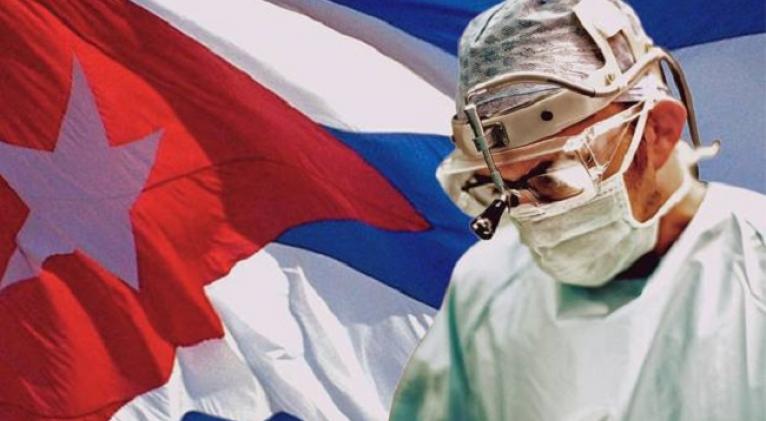
 Guantanamo.- The medical cooperation program stands out as a quintessential representation of the humanist spirit of the Cuban Revolution, which has endured for over sixty years. This initiative embodies a fundamental truth that even the most aggressive propaganda cannot obscure: despite facing an intensified blockade and ongoing imperial hostility, Cuba has consistently prioritized humanitarian efforts, famously encapsulated in the mantra, “Doctors, not bombs!” This principle, championed by Fidel Castro, underscores the nation’s commitment to health over militarization.
In a world where many nations respond to crises by tightening borders and targeting migrants, Cuba remains a symbol of hope and opportunity for countless individuals. Amidst a relentless media campaign that seeks to label the island as a “sponsor of terrorism,” the reality presented by Cuba’s dedicated healthcare professionals serves as a powerful counter-narrative.
The statistics are compelling: over 8 million lives saved across 165 countries, nearly 16 million surgical procedures conducted, and more than 17 million vaccines administered globally highlight Cuba’s significant contributions to global health.
Cuba’s preparedness for natural and health disasters is unparalleled, exemplified by the Henry Reeve Contingent, named after a young American who fought for Cuban independence.
This brigade of medical professionals has consistently demonstrated heroism in the face of global emergencies. From providing immediate aid after the devastating 7.8 magnitude earthquake in Pakistan in 2005 to sending over 400 healthcare workers to combat the Ebola outbreak in West Africa in 2014, and responding to the COVID-19 pandemic in 2020, the Henry Reeve Contingent has become synonymous with compassion and resilience in the face of adversity.
The healthcare professionals from Guantánamo have extended their expertise and compassion to the most isolated regions of Venezuela, Bolivia, Angola, and beyond, earning the gratitude of the communities they assist, which transcends any promotional efforts.
Cuban doctors view themselves not as heroes, but as dedicated professionals committed to their ethical responsibilities, driven by a profound sense of social awareness. They travel the globe, motivated by a genuine desire to provide aid, rather than seeking recognition.
This commitment to social service exemplifies the humanistic principles of the Cuban Revolution, serving as a powerful counterargument to those who seek to label the system based solely on its shortcomings.
In a world where some stockpile weapons, Cuba chooses to cultivate hope. Amid global challenges such as pandemics and natural disasters, the Cuban example serves as a reminder that a better future is attainable, with solidarity as the most potent tool for positive change.
Source: Venceremos Newspaper
