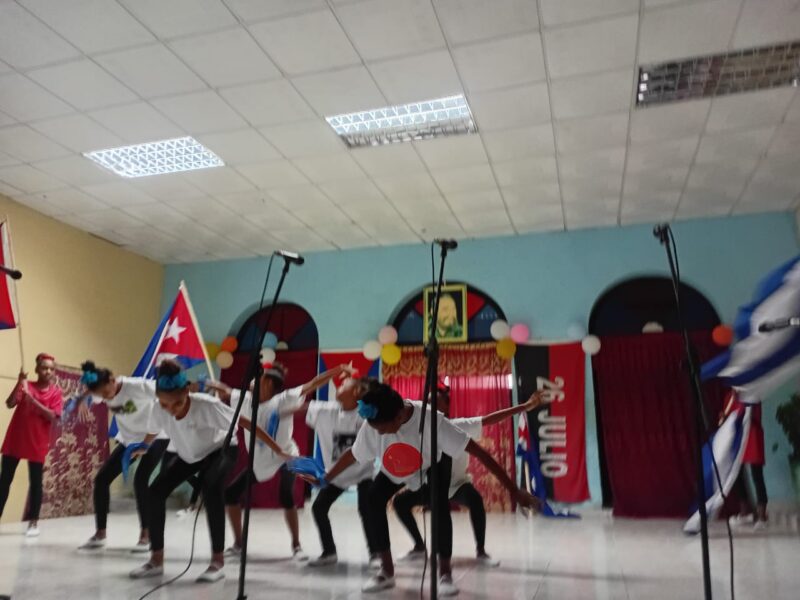
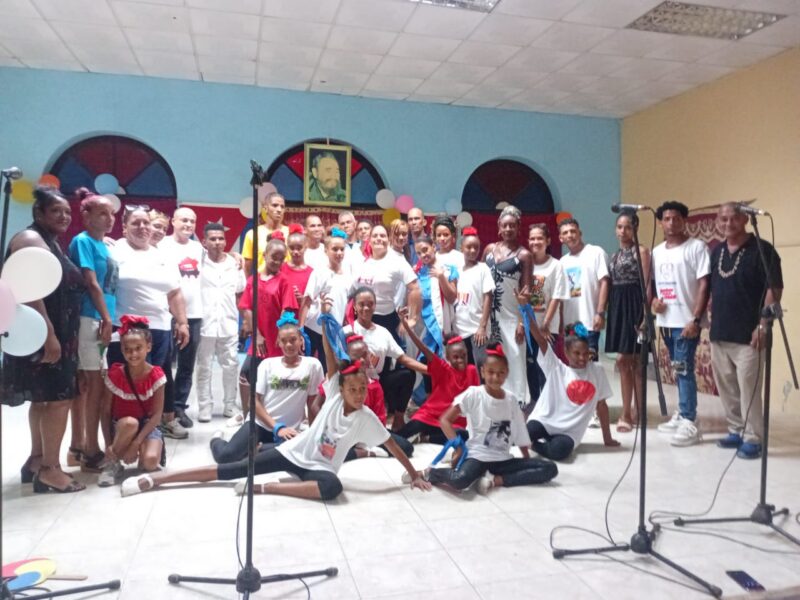
 Guantanamo. The Diómedes Silveira Valdés House of Culture in the municipality of El Salvador was elegantly adorned to host a distinctive evening: the artistic and cultural gala “Fidel: Eternally Young,” commemorating the Centenary of the Commander-in-Chief.
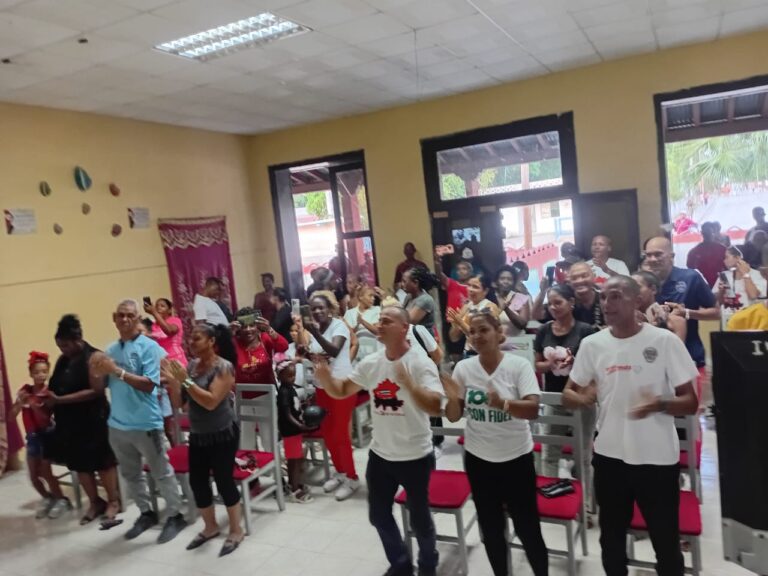
This historic venue served as an ideal setting for the municipality’s highest political and governmental authorities to engage with the public alongside a talented ensemble of artists who passionately dedicated themselves to each performance.
The program opened with a proclamation of rebel poetry, recited by a declaimer—poetry that Fidel Castro himself carried both in his backpack and in his speeches.
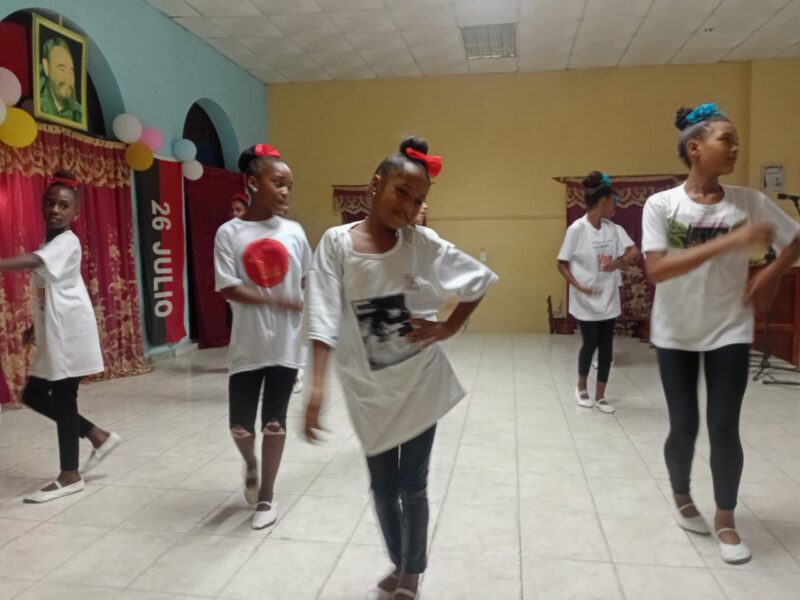
Soon, these words transformed into music: the changüí, an ancestral rhythm from the eastern region, resonated through the walls of the House of Culture. The dancers’ movements brought the rhythm to life, establishing a profound dialogue between tradition and living memory.
Each musical selection and choreography paid homage to the visionary ideas of the Revolution’s historic leader.
“Fidel did not depart; he became song,” affirmed the Art Instructors of the José Martí Brigade.
This theatrical masterpiece would not have been possible without the exceptional expertise of the sound engineers, who crafted each transition into an emotional journey—seamlessly blending poetry, rhythm, and movement into a unified experience.
As the artists proclaimed in the finale, “Fidel will have many more Centenaries because he remains a man who dreams.”
Fidel Castro Ruz is not simply marking one hundred years; he is celebrating his inaugural centenary. For when eternity is founded upon art and dignity, it transcends time itself.