
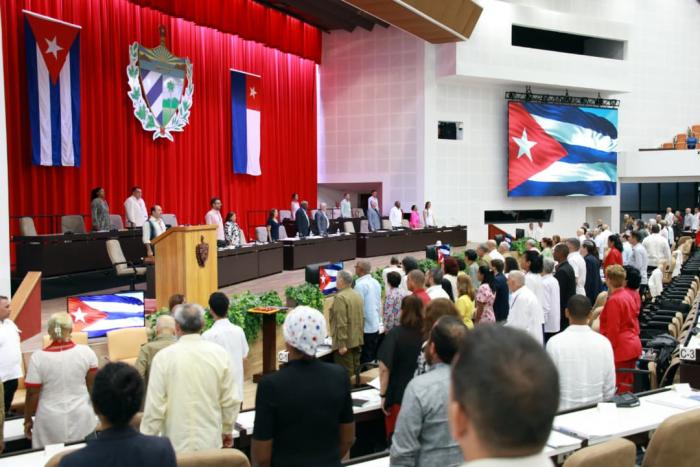
The member of the Political Bureau of the Communist Party of Cuba and Prime Minister, Manuel Marrero Cruz, offered a detailed report to the National Assembly of People’s Power on the progress in the implementation of the Economic and Social Transformations, on the first month since their implementation; in his speech, he highlighted that this process is taking place in a context marked by the intensification of illegal measures imposed by the United States, which have directly affected the economy and social welfare of the country.
Marrero Cruz emphasized that during the first half of this year, Cuba has faced the impact of Executive Order 14404, in effect since May 1st, which includes secondary sanctions directed not only against Cuba, but also against foreign individuals and entities with commercial ties to it; the prime minister stated that these measures are based on “false arguments” that present Cuba as a threat to U.S. national security, noting that the nation has provided evidence that discredits such accusations.
These restrictions have deepened the difficulties in strategic sectors, including energy, agri-food, tourism, finance, public health and foreign trade; in this regard, Marrero highlighted the paralysis of key shipping operations, which has caused the retention of containers with food, medicines and other essential supplies in nearby ports, seriously affecting the national supply chain.
Regarding the economic and social transformations, the Prime Minister defined them as the most profound process of modernization of the Cuban economic and social model, aligned with the Government Program for 2026; after its approval in June, an updating process was carried out that incorporated guidelines from Army General Raúl Castro Ruz, as well as suggestions from experts and legislators, of which 165 out of 171 proposals were accepted to enrich the scope of the reforms.
Manuel Marrero explained that the Council of Ministers organized the implementation in clear stages, which include the design of public policies, legal regulations, and timelines with defined responsibilities, with the formation of specialized working groups and training seminars aimed at Party and Government cadres at the national, provincial, and municipal levels; in addition, a timeline was coordinated with the National Assembly to approve 138 legal regulations that support the process, already achieving the endorsement of 90.9% of the transformations planned for June and July.
Regarding specific advances, in the area of the economic actors management model, 28 of the 31 planned reforms were approved, most notably the new Decree-Law on the State Business System, which grants greater autonomy to state-owned enterprises. Legislation was also approved to regulate micro, small, and medium-sized enterprises (MSMEs), non-agricultural cooperatives, and self-employment, facilitating their legal integration and expanding their permitted activities. These measures aim to strengthen productive forces and increase the supply of goods and services for the population, marking a decisive step in Cuba’s economic modernization.
Source: Radio Progreso
